Ever walked through the grocery store wondering why your bill keeps climbing higher every week? You’re not alone. The average family wastes hundreds of dollars monthly on last-minute takeout, impulse grocery buys, and food that spoils before it’s eaten. But here’s the good news: meal prepping can slash your food costs dramatically while making your life easier.
I’m going to show you exactly how to save $200 or more each month through smart meal prepping strategies that professional meal planners use. These aren’t complicated techniques that require hours in the kitchen. Instead, you’ll learn simple, practical methods that fit into busy schedules and actually save you money.
The beauty of meal prepping goes beyond just saving cash. You’ll eat healthier, reduce stress about what’s for dinner, and gain back precious time during your week. Let’s dive into the strategies that can transform your food budget and your life.
Understanding the Real Cost of Your Current Food Habits
Before we jump into solutions, let’s examine what’s actually costing you money. Most people underestimate their food expenses by 30-40% because they don’t track all the small purchases that add up quickly.
Consider this typical week: three takeout dinners at $15 each ($45), two $8 lunches at work ($16), a $10 impulse snack run, and $30 in produce that spoils before you use it. That’s $101 in avoidable spending right there. Multiply that by four weeks, and you’re looking at over $400 in wasted money.
The problem isn’t that you’re bad with money—it’s that our food system is designed to make spontaneous purchases easy and appealing. Restaurants use psychology to make their meals look irresistible. Grocery stores place expensive items at eye level. Food delivery apps make ordering just one click away.
When you meal prep, you’re essentially creating a barrier between your money and these impulse purchases. You’re making decisions when you’re calm and rational, not when you’re hungry and rushed. This simple shift can save you hundreds monthly without feeling like you’re depriving yourself.
The $200 Savings Breakdown: Where the Money Actually Goes
Let’s get specific about how meal prepping saves you $200 monthly. This isn’t just a random number—it’s based on real spending patterns and savings opportunities.
First, consider restaurant meals. The average takeout dinner costs $12-15 per person, while a home-cooked meal costs $3-4. If you replace just four takeout dinners weekly, that’s $44 in savings. Add in workday lunches—$8 for takeout versus $2-3 for packed lunches—and you’re saving another $20 weekly.
Next, look at grocery waste. The average family throws away 30-40% of purchased produce. If you spend $150 weekly on groceries, that’s $45-60 in wasted food. Meal prepping ensures you buy only what you need and use it all.
Then there’s the convenience factor. When you have meals ready to go, you’re less likely to make expensive impulse purchases like vending machine snacks or coffee shop stops. These $3-5 purchases seem small but add up to $60+ monthly.
Finally, meal prepping reduces food waste from poor planning. When you know exactly what you’re eating each day, you buy ingredients in the right quantities and use them efficiently. No more half-used herbs wilting in the fridge or chicken going bad because you forgot to cook it.
Essential Meal Prep Equipment That Pays for Itself
You don’t need fancy equipment to start meal prepping, but a few key items will make the process much easier and more effective. Think of these as investments that pay you back through savings.
Glass containers are worth every penny. They’re durable, microwave-safe, and don’t absorb food odors or stains like plastic. A set of five glass containers costs around $25-30 but lasts for years. Compare that to constantly replacing cheap plastic containers that warp or stain.
A good quality knife and cutting board might seem basic, but they make food prep faster and more enjoyable. A sharp knife reduces prep time by 50% and makes you more likely to actually do the prep work. You can find excellent chef’s knives for $30-50 that will last a lifetime.
A digital kitchen scale helps with portion control and ensures you’re buying the right amounts. This prevents overbuying and helps you stick to your meal plan. Scales are available for under $15 and are invaluable for accurate meal planning.
Consider a slow cooker or Instant Pot for hands-off cooking. These appliances let you prepare large batches with minimal effort. A basic slow cooker costs around $30-40 and can make enough food for multiple meals, perfect for meal prep beginners.
Smart Grocery Shopping Strategies That Maximize Savings
The foundation of successful meal prepping is smart grocery shopping. This isn’t about clipping dozens of coupons or visiting multiple stores. It’s about shopping strategically to get the most value for your money.
Start by planning your meals before you shop. This sounds obvious, but most people shop without a clear plan, leading to impulse buys and wasted ingredients. Take 10 minutes to decide what you’ll eat for the week, then create a specific shopping list.
Buy in bulk for items you use regularly. Rice, pasta, beans, and frozen vegetables are often 30-50% cheaper when purchased in larger quantities. The key is buying only what you’ll actually use. A 10-pound bag of rice might seem like a great deal, but not if it takes you two years to use it.
Shop the sales, but strategically. Don’t buy something just because it’s on sale—buy it because it fits your meal plan. Many stores have predictable sales cycles. Learn these patterns and stock up on staples when they’re discounted.
Consider store brands, which are often identical to name brands but cost 20-30% less. For basic ingredients like canned tomatoes, pasta, or rice, you likely won’t notice any difference in quality.
The Perfect Meal Prep Schedule for Busy People
You don’t need to spend your entire Sunday in the kitchen to benefit from meal prepping. The key is finding a schedule that works for your lifestyle and sticking to it consistently.
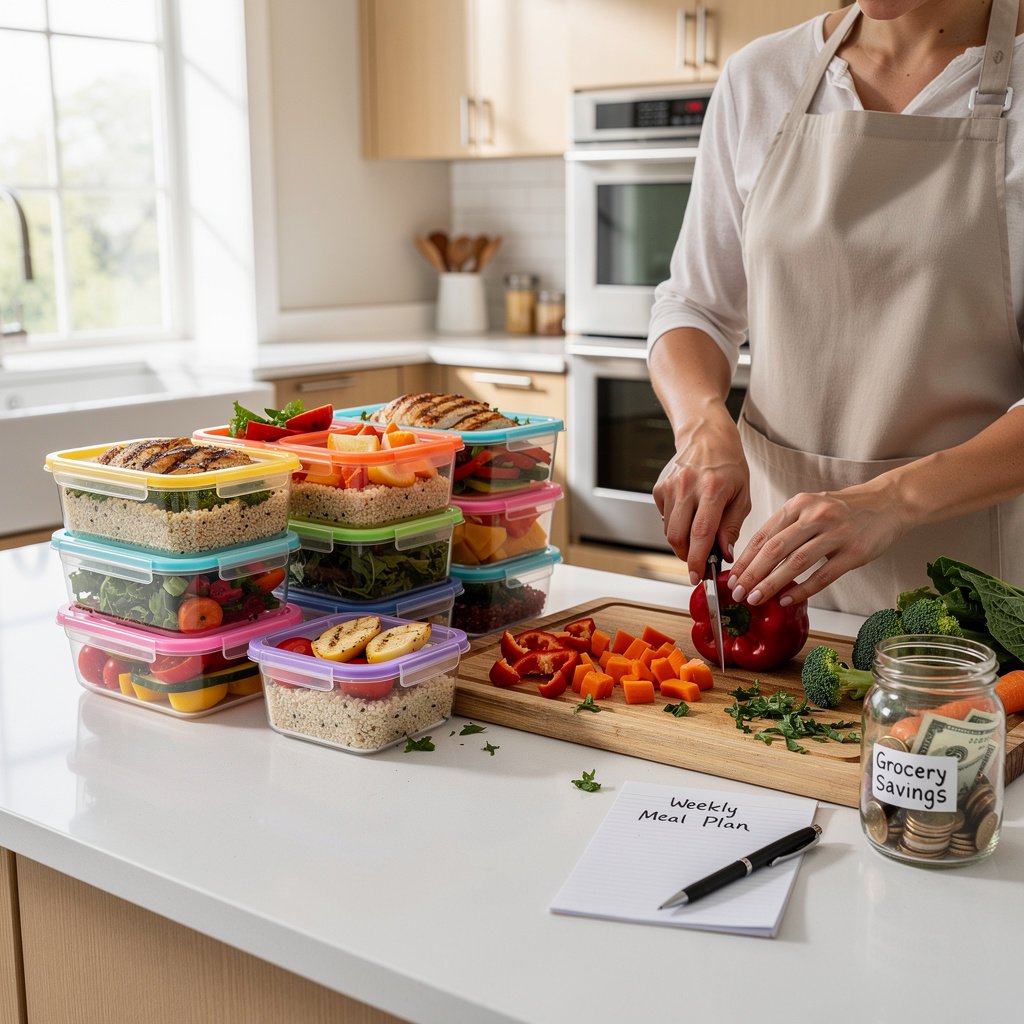
Most successful meal preppers dedicate 1-2 hours on the weekend to prepare for the week ahead. This might mean cooking three main dishes that can be mixed and matched, chopping vegetables for quick assembly, and portioning out snacks.
Here’s a realistic schedule: Sunday afternoon, spend 30 minutes planning meals and making a grocery list. Shop on Sunday evening when stores are less crowded. Monday evening, spend one hour cooking staples like rice, chicken, or beans that can be used in multiple meals throughout the week.
Prep ingredients rather than entire meals. Chop vegetables, cook grains, and prepare sauces, but keep some flexibility in how you combine them. This prevents meal fatigue while still saving time and money.
Consider a mid-week refresh. Take 30 minutes on Wednesday to prep a few items for the second half of the week. This keeps your meals fresh and prevents that end-of-week desperation that leads to takeout.
Budget-Friendly Meal Prep Recipes That Cost Under $2 Per Serving
The heart of meal prepping is having recipes that are both delicious and economical. Here are some proven winners that cost significantly less than restaurant alternatives.
Bean and rice bowls are a meal prep staple for good reason. A pound of dried beans costs about $1.50 and makes eight servings. Add $1 worth of rice, $2 in vegetables, and basic seasonings, and you have eight meals for under $5 total—that’s just $0.63 per serving.
Chicken and vegetable stir-fry is another winner. Buy chicken thighs instead of breasts—they’re cheaper and more flavorful. A family pack of thighs costs around $6 and provides six servings. Add $2 in vegetables and $1 in rice, and you’re at $1.50 per serving.
Egg-based meals are incredibly economical. A dozen eggs costs about $3 and provides six two-egg servings. Make frittatas, egg muffins, or breakfast burritos with inexpensive add-ins like potatoes, onions, and peppers. You can create satisfying meals for under $1 per serving.
Pasta dishes stretch expensive ingredients. A pound of pasta costs $1-2 and serves four people. Combine it with vegetables, a small amount of meat or beans, and homemade sauce for meals under $2 per serving.
Storage Solutions That Keep Food Fresh Longer
Proper storage is crucial for meal prep success. Food that spoils before you eat it defeats the entire purpose of prepping ahead. Understanding storage basics can extend your food’s life by days or even weeks.
Glass containers with airtight lids are superior to plastic for several reasons. They don’t absorb odors, they’re more durable, and they’re better for the environment. Most importantly, they keep food fresher longer because they create a better seal.
Invest in a variety of container sizes. Small containers are perfect for snacks and individual portions. Medium containers work well for lunches. Large containers are ideal for family meals or ingredients you’ll use throughout the week.
Learn which foods store well together and which don’t. Cooked grains and proteins store beautifully together for 3-4 days. However, cut fruits and vegetables often release moisture that can make other foods soggy. Store these separately and combine just before eating.
Freeze strategically. Many meal prep dishes freeze exceptionally well—soups, stews, casseroles, and cooked grains all maintain quality for months. Portion these into individual servings before freezing for easy thawing.
Common Meal Prep Mistakes That Cost You Money
Even with the best intentions, certain meal prep mistakes can actually cost you more money than they save. Being aware of these pitfalls can help you avoid them.
Over-preparing is a common mistake. Making ten portions of a dish when you only need five means you’re either eating the same thing for days or throwing food away. Start with smaller batches and adjust based on what you actually consume.
Choosing recipes with expensive ingredients defeats the purpose of meal prepping for savings. While that salmon and asparagus dish might be delicious, it’s not budget-friendly. Focus on recipes that use economical ingredients as their base.
Not accounting for schedule changes can lead to waste. If you prep five lunches but end up going out with coworkers twice, you’ve wasted food. Build some flexibility into your plans or choose recipes that freeze well.
Poor portion control means you might be prepping too much or too little. Use measuring cups or a food scale until you learn what appropriate portions look like for your needs.
Tracking Your Savings and Staying Motivated
One of the most powerful aspects of meal prepping is seeing your actual savings accumulate. This tangible evidence helps you stay motivated and refine your strategies over time.
Start by tracking your food spending for one month before you begin meal prepping. Save receipts or use a budgeting app to see exactly where your money goes. This becomes your baseline for comparison.
After you’ve meal prepped for a month, track your spending again. The difference between these two numbers is your actual savings. You might be surprised to see how quickly small changes add up to $200 or more.
Consider creating a visual savings tracker. Every time you would have spent money on takeout or convenience food but didn’t because you had a prepped meal, move a marker on your tracker. Watching this grow provides powerful motivation to continue.
Share your successes with family or friends. Having an accountability partner makes you more likely to stick with meal prepping. You might even inspire others to join you, creating a supportive community around healthy, economical eating.
Frequently Asked Questions About Meal Prepping
How long does meal prepped food stay good in the refrigerator?
Most cooked meals stay fresh for 3-4 days when stored properly in airtight containers. Some foods, like cooked grains and proteins, may last up to 5 days. Always use your senses—if food smells off or looks questionable, it’s better to be safe and discard it.
Can I meal prep if I have dietary restrictions or allergies?
Absolutely! Meal prepping is actually ideal for people with dietary restrictions because you have complete control over ingredients. Many people with allergies or specific dietary needs find that meal prepping makes eating out less stressful and more economical.
Is it cheaper to meal prep or buy pre-made meals?
Meal prepping is almost always cheaper than buying pre-made meals or restaurant food. Even when you factor in the time spent prepping, the cost savings are significant. Pre-made meals often cost $5-8 per serving, while homemade versions typically cost $2-3.
How do I prevent meal prep boredom?
The key is variety and flexibility. Instead of prepping identical meals for the entire week, prepare components that can be mixed and matched. Also, try one or two new recipes each week while keeping your staples consistent. This provides enough variety to keep things interesting.
What if I don’t have time to meal prep on weekends?
Meal prepping doesn’t have to happen all at once. You can prep components throughout the week—cook extra dinner for lunch the next day, chop vegetables while waiting for coffee to brew, or assemble overnight oats before bed. Find pockets of time that work for your schedule.
Conclusion
Meal prepping like a pro isn’t about spending hours in the kitchen or eating the same boring meals every day. It’s about making strategic choices that save you money while making your life easier. By implementing the strategies we’ve covered—smart shopping, efficient prep schedules, proper storage, and avoiding common mistakes—you can realistically save $200 or more each month.
Remember, the goal is progress, not perfection. Start small by prepping just a few meals per week, then gradually increase as you discover what works for you. Track your savings to stay motivated, and don’t be afraid to adjust your approach based on your results.
The beauty of meal prepping is that it creates a positive cycle: you save money, you eat healthier, you reduce stress, and you gain more control over your time. Those benefits compound over time, making meal prepping one of the highest-impact changes you can make for both your finances and your wellbeing.
Ready to start your meal prep journey? Pick one strategy from this article and implement it this week. You might be surprised at how quickly those small changes add up to significant savings.